
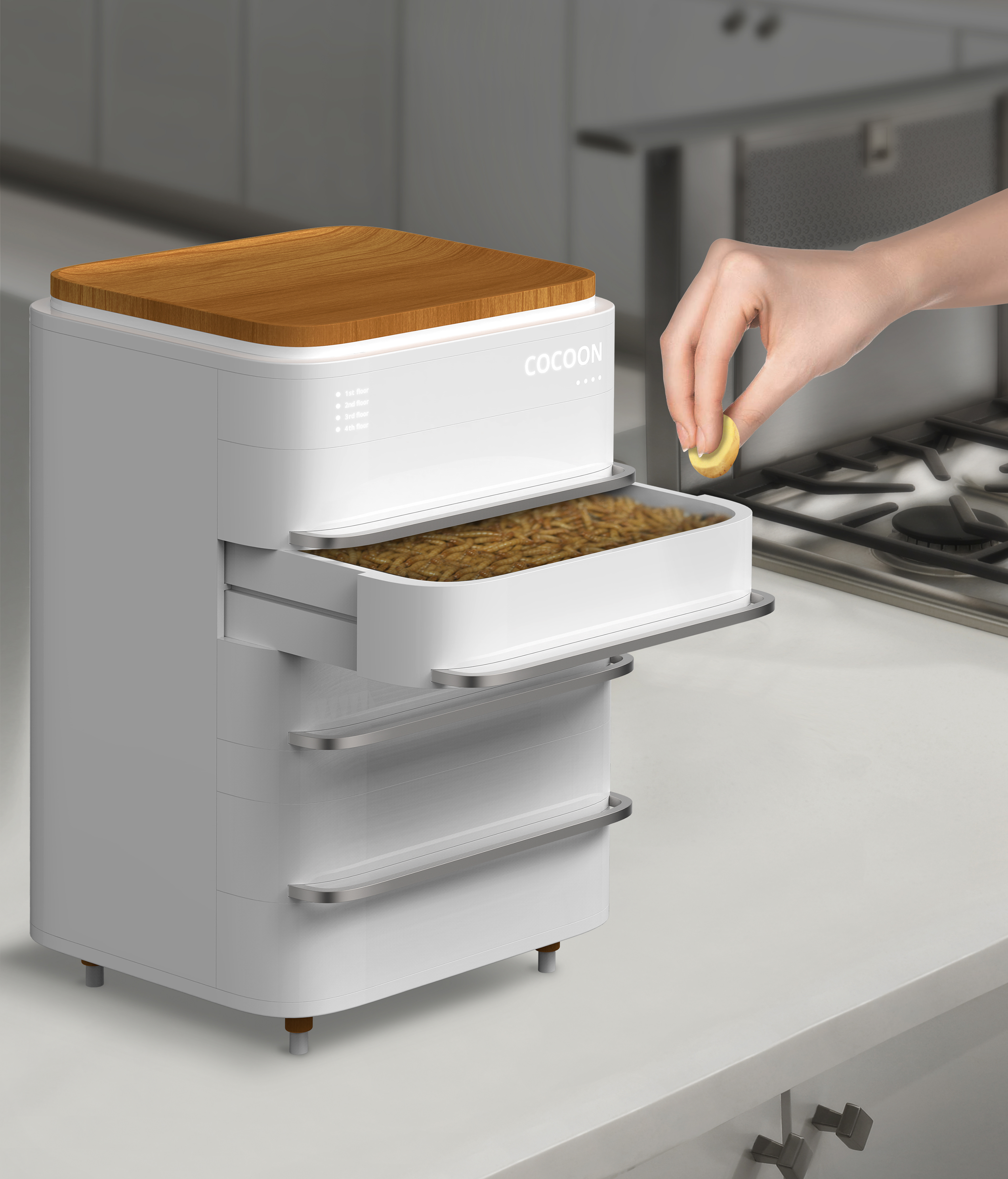
COCOON
Mealworm Home Farming System
2018
-
Refurbish 2019
Designed by Minwoo Kim
-
Refurbish 2019
Designed by Minwoo Kim
Project Type: Personal Project
Mealworms are emerging as a promising future food source due to their high nutritional value and low environmental impact. They are rich in protein, easy to farm, and require significantly less land, feed, and time to produce compared to traditional livestock. As global food demand continues to grow, mealworms offer a more sustainable alternative that could help reduce pollution and address future food shortages.
According to a UN report, livestock farming accounts for 18% of global greenhouse gas emissions, exceeding the emissions from the entire transportation sector. It also contributes to water and soil pollution, placing further pressure on the planet’s resources. With the world population projected to reach 9.7 billion by 2050, the current food production system may become increasingly difficult to sustain. In this context, alternative protein sources such as mealworms could play an important role in supporting a more sustainable food future.
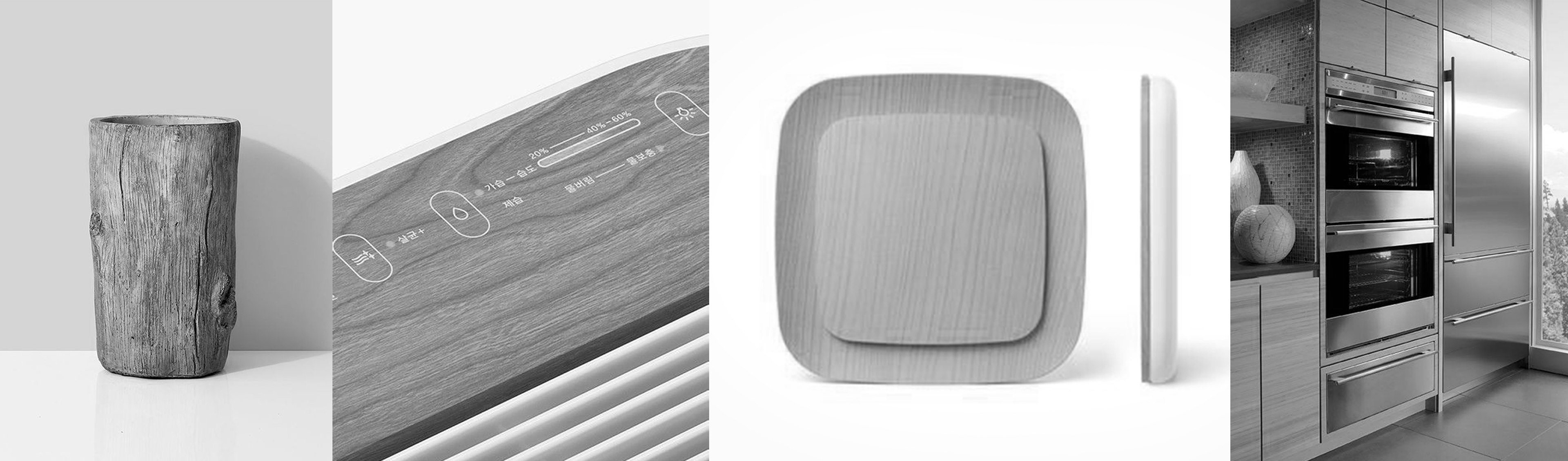
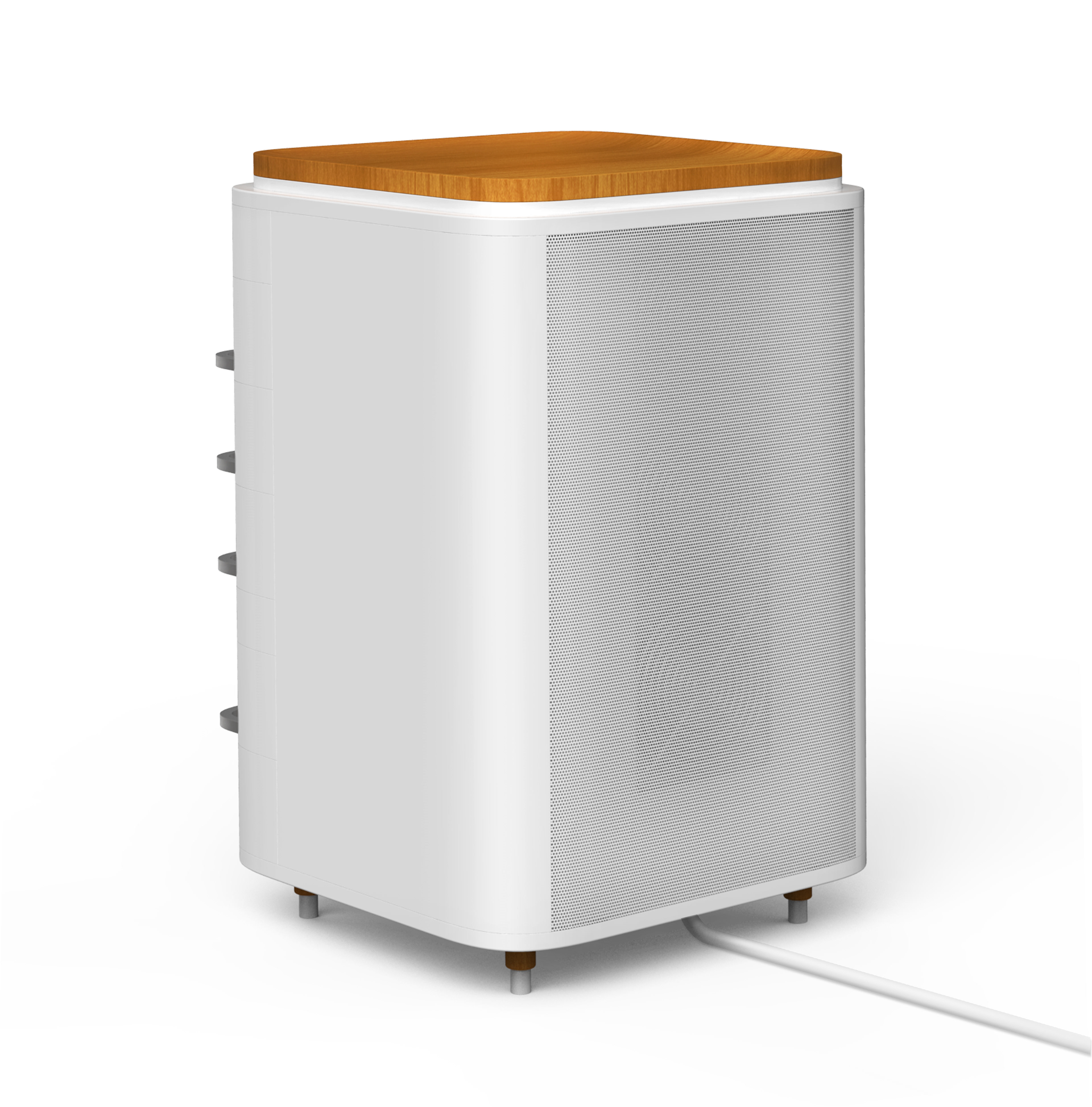
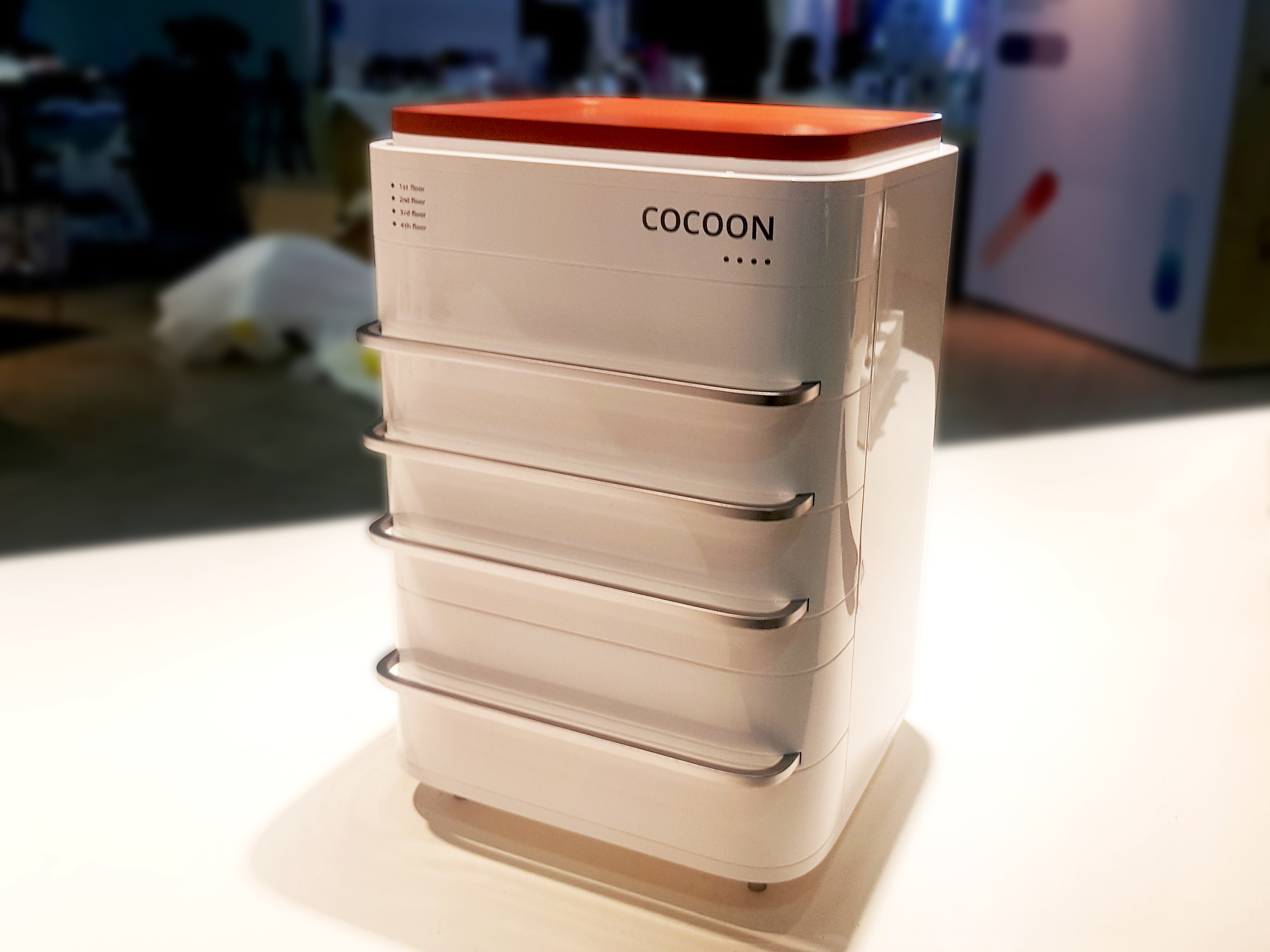
Cocoon’s design language is inspired by the shape, texture, and natural patterns of trees, referencing the log environments where mealworms are commonly found.
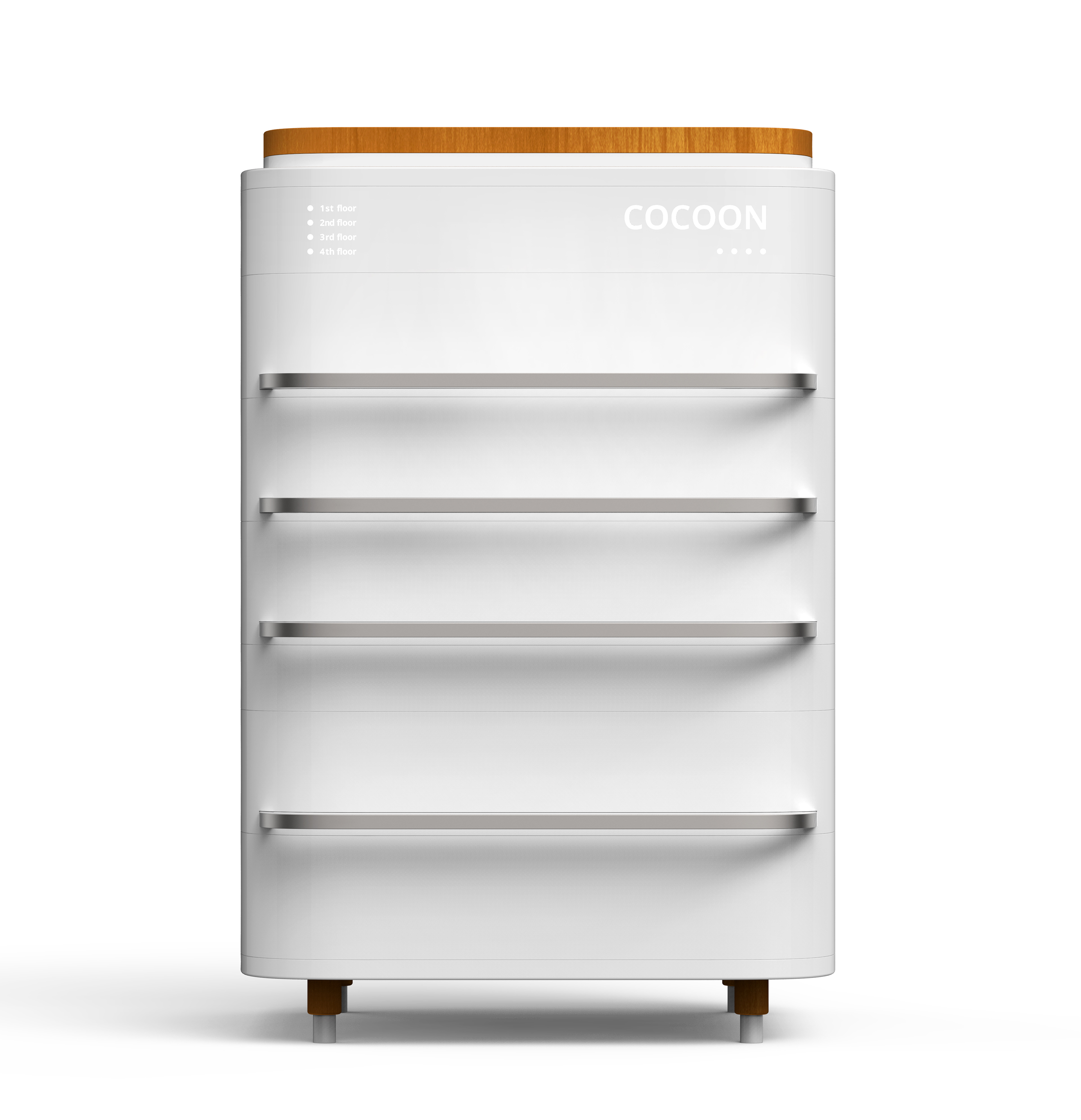
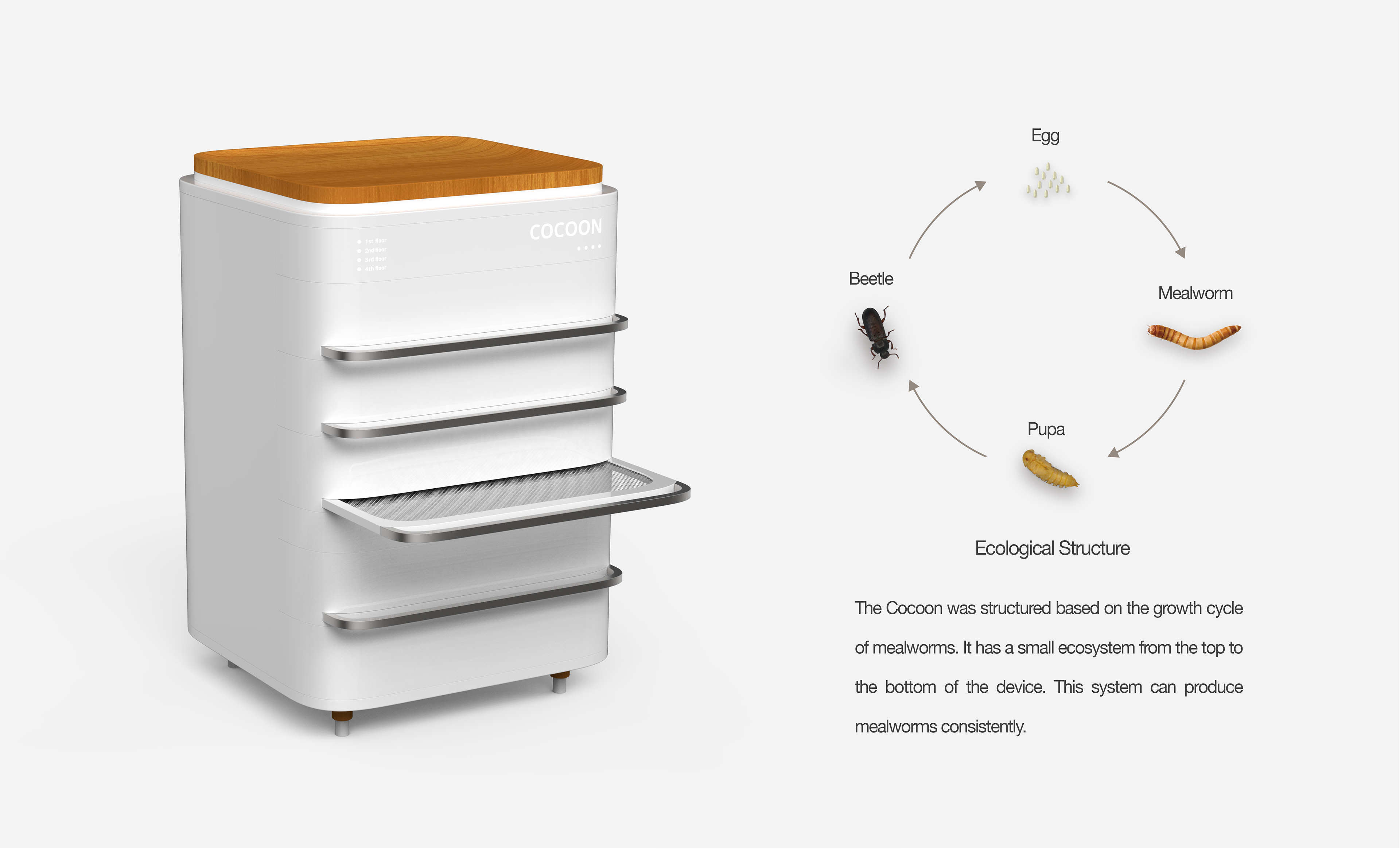
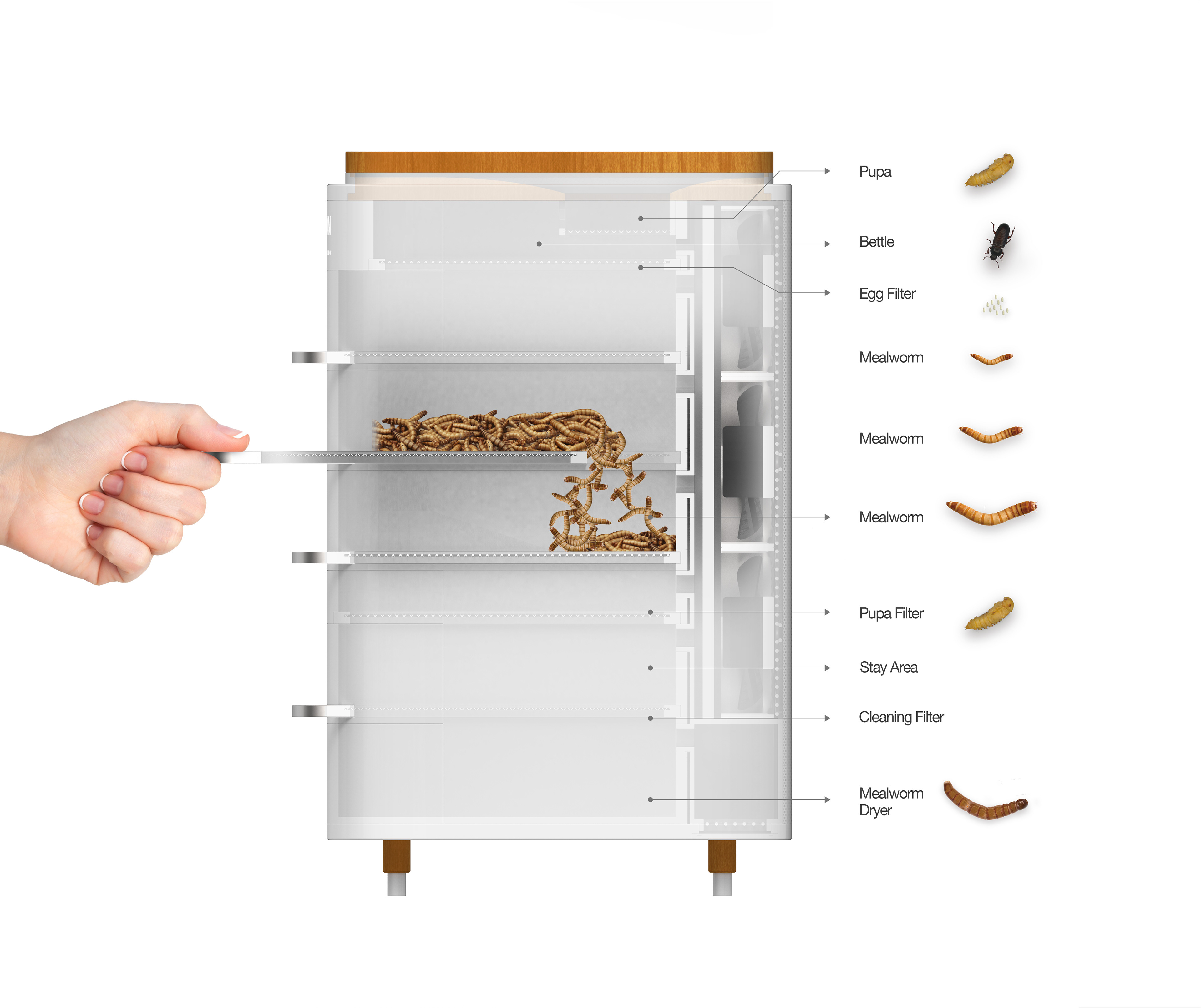
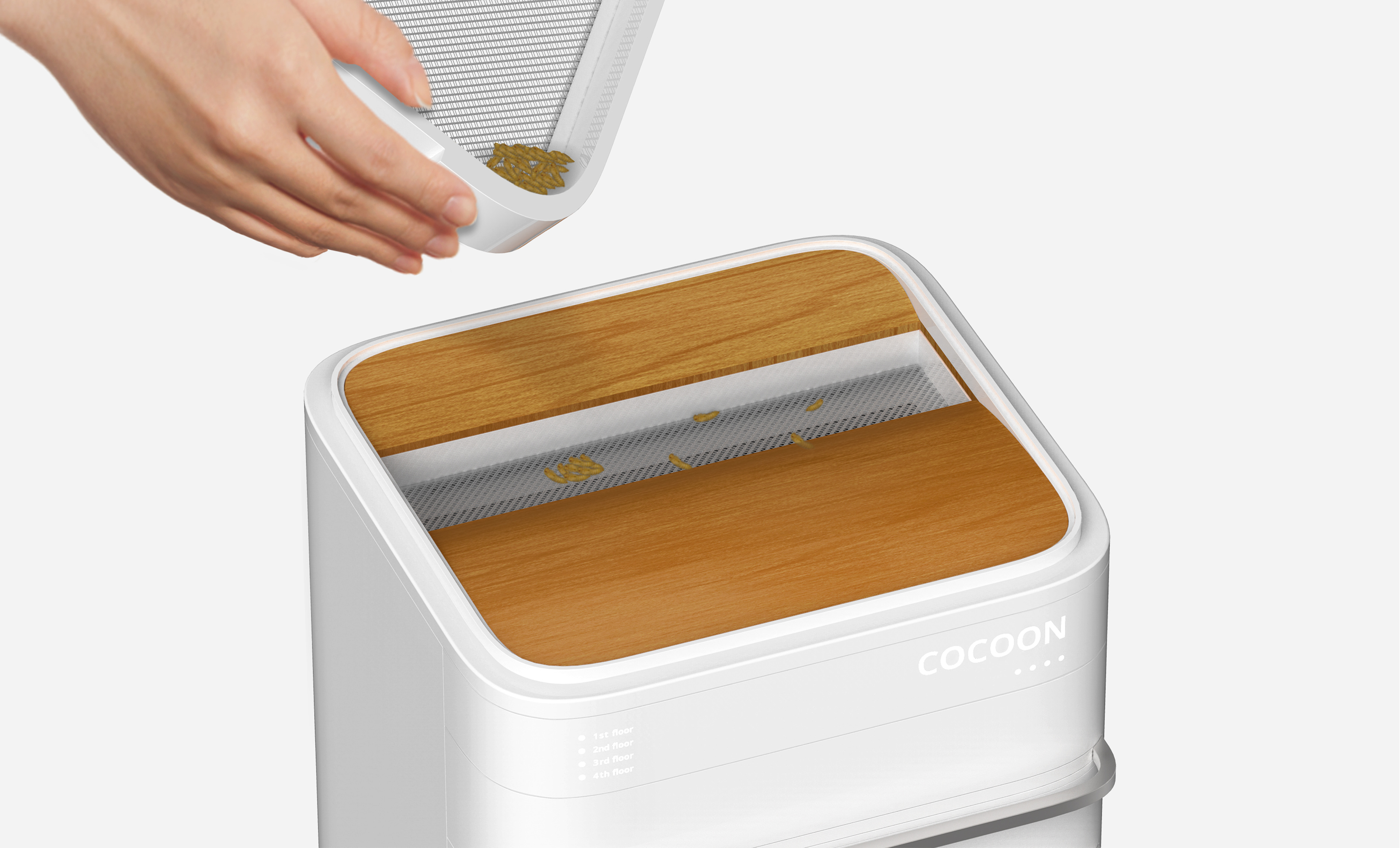
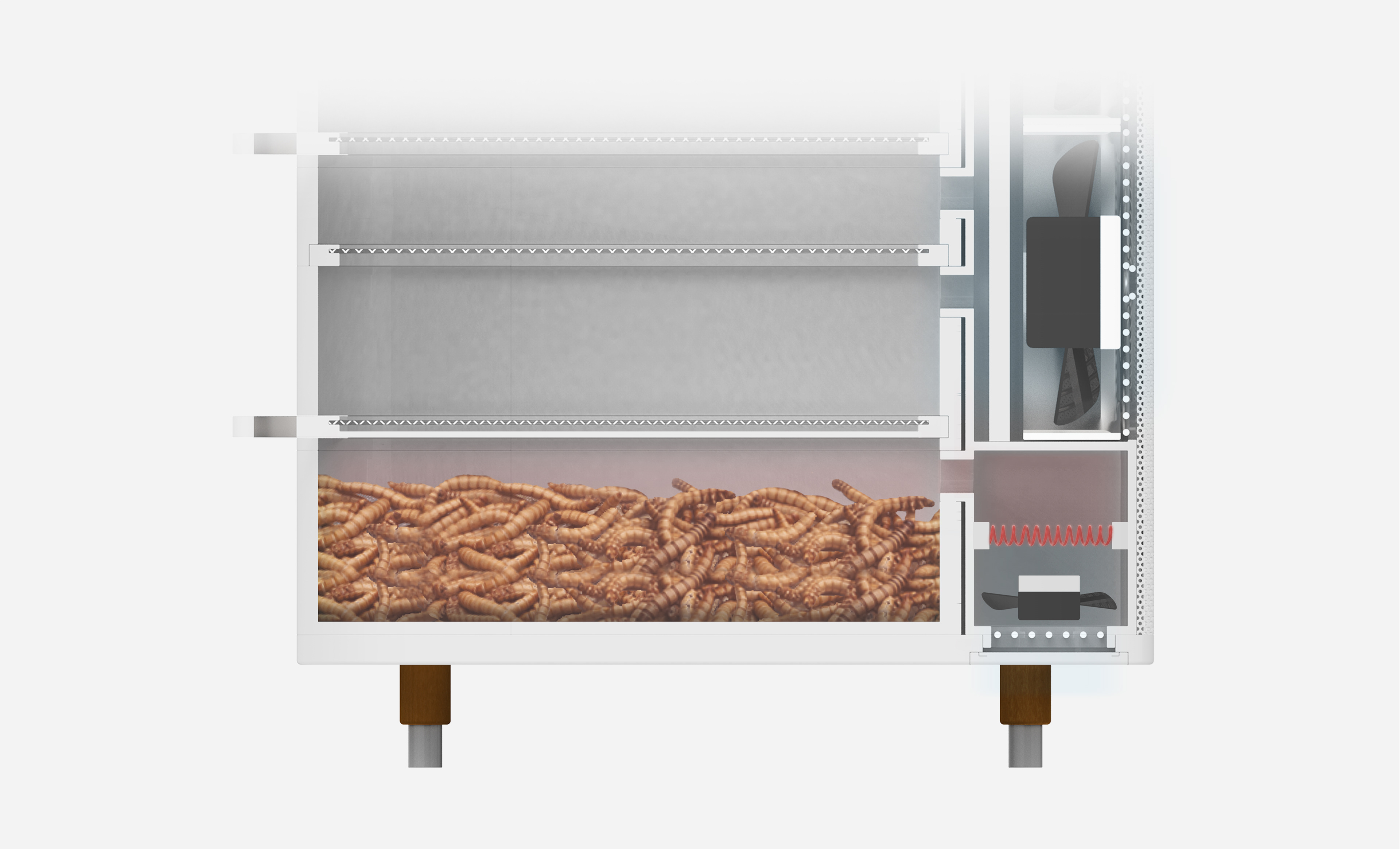
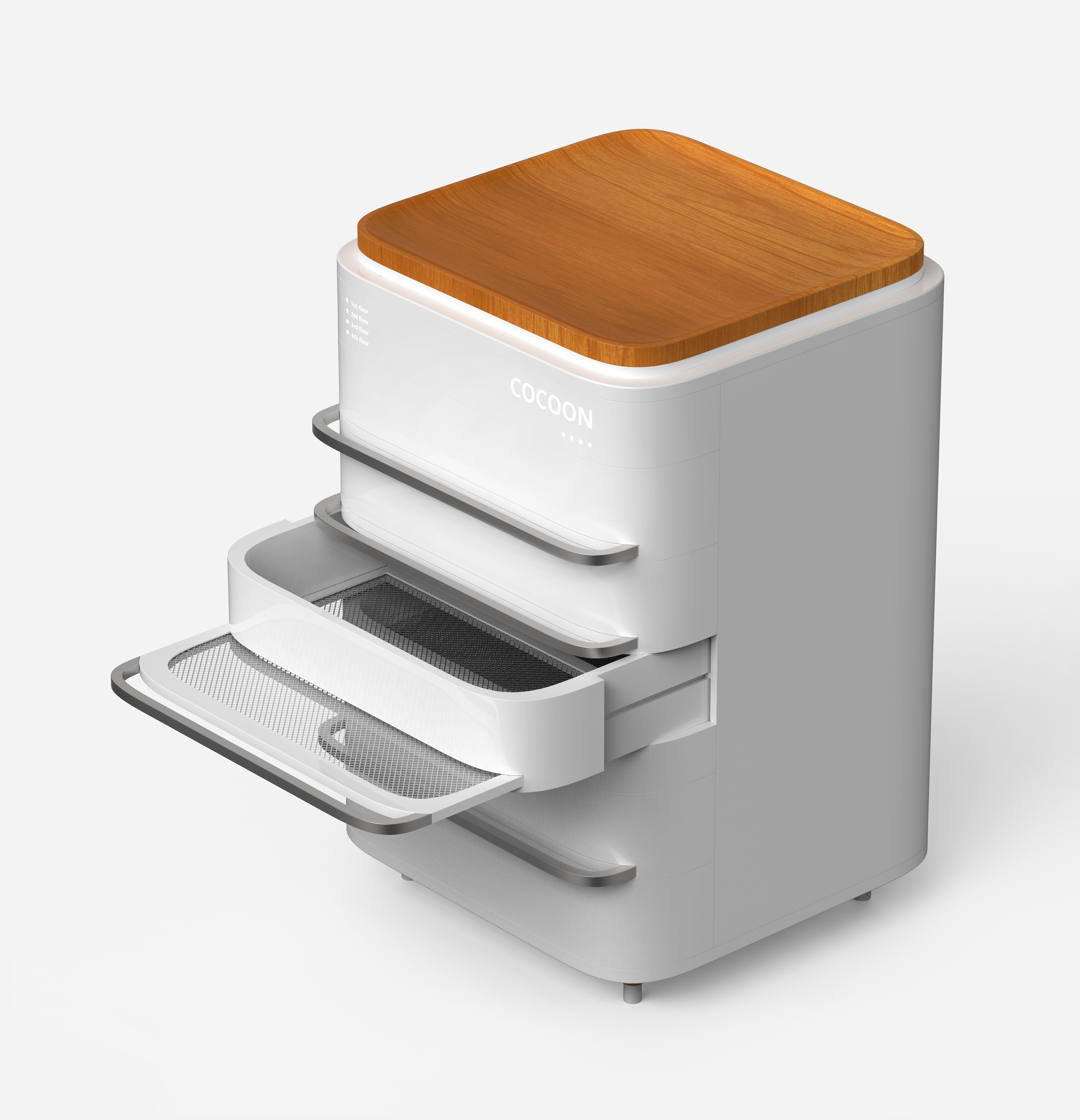
When the pupa filter is full, the pupae are transferred to the upper section of the device. After hatching, the beetles naturally move through small openings into the breeding area, where they lay eggs. Mature mealworms are collected and dried in the lower section, completing the process and making them ready for consumption. Integrated air holes provide continuous ventilation, helping maintain fresh air while regulating humidity and temperature inside the device.

Designed by Minwoo Kim